
- Products
-
Audio & Studio Equipment
See all
-
Cameras & Optics
See all
- Computers & Mobile Devices
- Drones & Aerial Imaging
-
Professional Video & AV
See all
- Security & Surveillance
- TVs & Entertainment
SubcategoriesSee all -
Audio & Studio Equipment
- About us
- Contact Us
- +1-888-219-0753
- Bulk Order

- Products
-
Audio & Studio Equipment
See all
-
Cameras & Optics
See all
- Computers & Mobile Devices
- Drones & Aerial Imaging
-
Professional Video & AV
See all
- Security & Surveillance
- TVs & Entertainment
SubcategoriesSee all -
Audio & Studio Equipment
- About us
- Contact Us
- +1-888-219-0753
- Bulk Order
HomeCatalogProfessional Video & AVPro Video StreamingStreaming PTZ CamerasBolin Technology D2-210H Dante AV-H PTZ Camera with 10x Optical Zoom (Black)
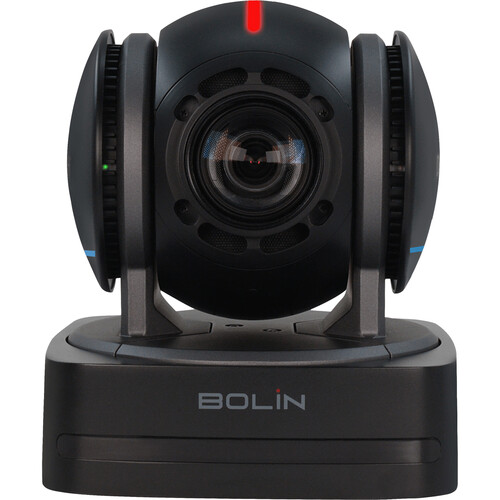
Bolin Technology D2-210H Dante AV-H PTZ Camera with 10x Optical Zoom (Black)
In Stock
SKU #
BOD2210H
Mfr #
D2-210H
Manufacturer
Bolin Technology
Description
Add a camera to your conference room, education environment, house of worship, or live event production with the black D2-210H Dante AV-H PTZ Camera with 10x Optical Zoom from Bolin. This PTZ camera is designed to capture and live stream up to 1080p video via HDMI, USB, or Dante AV, and be remotely controlled over serial, IP, and the Dante AV IP protocol. It seamlessly fits right into an existing Dante AV ecosystem and allows you to utilize a separately available network decoder to transport, route, and decode video for network presentations. The D2-210H series camera features a 1/2.8" CMOS sensor to capture resolutions up to 1080p60. The built-in zoom lens has an optical zoom range of 10x, and you can zoom in further with the 16x digital zoom. The camera compresses using HEVC/H.265 (via IP) or H.264 (via IP/Dante AV), and you can transmit up to two streams at the same time using RTSP or RTMP protocols up to 1080p60. With 255 programmable preset positions and 6 presets on the included IR remote, you can set the camera to rapidly move between positions using the IP, RS-232, RS-422/RS-485, or IR control with separately available controllers. The camera supports external audio input via a 3.5mm stereo mic/line-level jack, and it transports up to eight channels of Dante audio. The camera can be powered using PoE+ or with the included AC adapter. It can sit on a flat surface or be mounted using a separately available ceiling or wall mount bracket. Dante AV-H TechnologyNone Dante AV-H is software for SoC-based video products that bring mature, comprehensive user control and management to H.264 AV-over-IP, delivering compatibility with any Dante audio network devices. Now, interoperability with AV-over-IP products from multiple vendors is a reality, letting users connect, manage, and configure all networked video and audio connections in a single Dante Controller window.None Dante AV H brings eight channels of Dante audio to your video products for instant compatibility with existing and planned installations, easing technical requirements, and simplifying system design.
Product Information
Availability:
In Stock