
- Products
-
Audio & Studio Equipment
See all
-
Cameras & Optics
See all
- Computers & Mobile Devices
- Drones & Aerial Imaging
-
Professional Video & AV
See all
- Security & Surveillance
- TVs & Entertainment
SubcategoriesSee all -
Audio & Studio Equipment
- About us
- Contact Us
- +1-888-219-0753
- Bulk Order

- Products
-
Audio & Studio Equipment
See all
-
Cameras & Optics
See all
- Computers & Mobile Devices
- Drones & Aerial Imaging
-
Professional Video & AV
See all
- Security & Surveillance
- TVs & Entertainment
SubcategoriesSee all -
Audio & Studio Equipment
- About us
- Contact Us
- +1-888-219-0753
- Bulk Order
HomeCatalogAudio & Studio EquipmentInstallation SoundProgrammable System Audio ProcessorsRCF RDNet Control 2 Compact 2-Output USB Interface
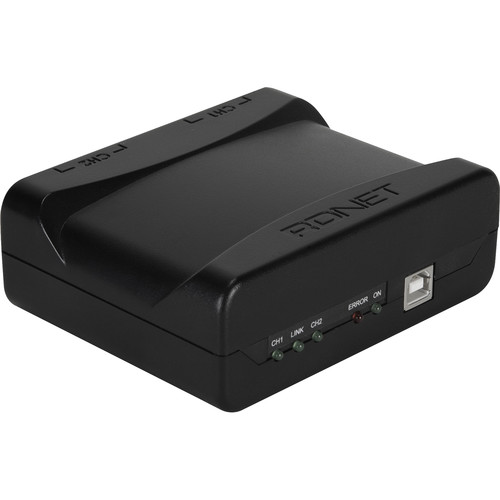
RCF RDNet Control 2 Compact 2-Output USB Interface
In Stock
SKU #
RCRDNET2
Mfr #
RDNET-2
Manufacturer
RCF
Description
Use the RCF RDNet Control 2 compact 2-output USB interface between RDNet-compatible devices and a Windows computer to take advantage of real-time monitoring and sophisticated control for installed sound, theater, and touring applications. With two locking XLR 3-pin female connectors, two locking RJ45 connectors, and a USB Type-B port, the RDNet Control 2 offers sufficient connectivity to accommodate two subnets, each with up to 32 devices. LEDs are provided for clear indication of channel, link, error, and power status directly on the unit. Automatic device addressing and cyclical scanning ensure fast and easy setup without user input. Via RDNet software, it is possible to edit device parameters such as level, EQ, and delay and save/recall configuration files.RDNet to Computer The RDNet Control 2 is a hardware interface for connecting RCF RDNet compatible devices (TTL55-A, TTL33-A II, TTL31-A II, etc.) to a Windows computer by means of a USB connection. The RDNet system was purposely developed to create a data network for monitoring and command of more systems. RDNET is a real-time system; information relating to the functioning of the devices is acquired in real time, a feature that allows a global view of connected devices.Supports up to 64 Devices The RDNet Control 2 unit can manage up to two subnets. Up to 32 devices can be connected to each subnet (two subnets x 32 = 64 total devices). The addressing of the various devices is handled automatically by the RDNet Control 2 interface. Each device is assigned a unique address during the power-on procedure of the network.RDNet Software For the RDNET network operating, it is necessary to install the appropriate software on a computer equipped with Microsoft Windows. From the computer, it is possible to check the operating of each single device connected to the network, and edit its parameters such as output level, mute, equalization, delay, etc. The network and devices configuration can be saved and later reloaded.Auto Scanning When online, the RDNet Control 2 unit sequentially scans all audio devices (10 scans per second), automatically labeling them with digital addresses. The loudspeaker objects are immediately added to the software synoptic as an object for each speaker (or any other audio device) found on the network.
Product Information
Availability:
In Stock